
How supraphysiological preconditioning™ works
By gently warming the skin, BLOOM43 causes the release of a special group of naturally occurring proteins within the body’s cells called ‘Heat Shock Proteins’ or HSPs. These protective proteins help our cells maintain their normal function. In particular, HSP-32 triggers the natural release of carbon monoxide into the surrounding tissue.
Carbon monoxide is a highly effective vasodilator, making blood vessels open up and increasing blood flow to the area.
And better blood flow means better healing.

50%
Reduced reoperation rates
70%
Reduced outpatient follow up
67%
Relative Risk Reduction of skin necrosis
Clinical trials demonstrate measurable increases in skin blood flow with supraphysiological preconditioning™
Sometimes, following breast surgery, patients may experience problems such as wound breakdown. This is often due to the disturbance of blood vessels supplying the skin during the operation. Depending on the extent of the wound complication, some patients may require further surgery, with longer hospital stays and frequent clinic appointments.
Prospective clinical trials* have demonstrated that supraphysiological preconditioning™ is a simple, non-invasive method that significantly reduces skin necrosis and shortens hospital stays following breast surgery. The studies showed a 24% absolute reduction in the rate of skin necrosis and a 50% reduction in the need for further surgical intervention.
BLOOM⁴³ has been developed as a simple, drug-free wearable device for home use. Worn for a few hours the night before surgery, it offers the benefits of supraphysiological preconditioning™ with precision and ease.

Right breast
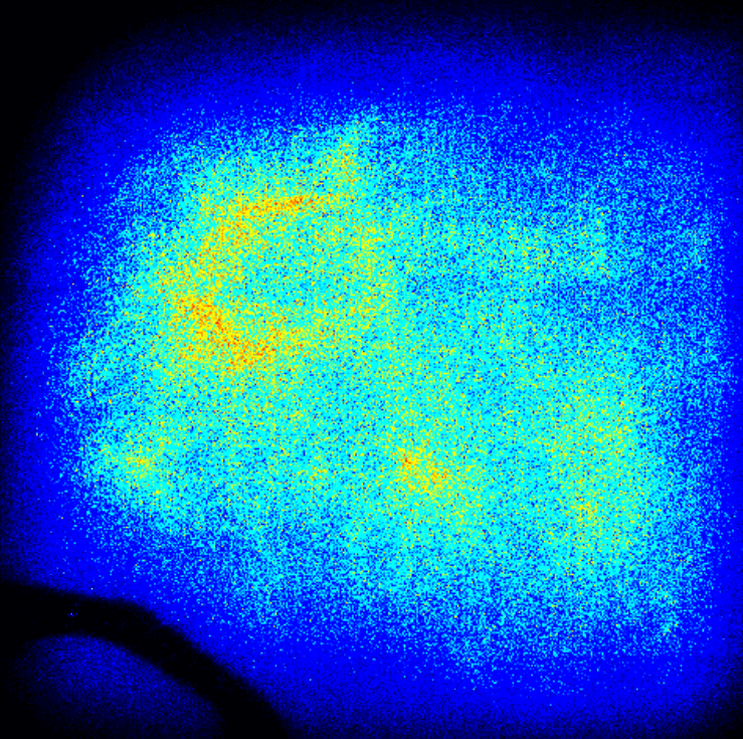
Left breast
The laser doppler scan shows the increased blood flow to the right preconditioned breast compared to the left non-preconditioned breast.
*Sources: “Local Heat Preconditioning in Skin Sparing Mastectomy: A Pilot Study”, Mehta S, Rolph R, Cornelius V et al., 2013; “A Randomised Controlled Feasibility Trial to Evaluate Local Heat Preconditioning on Wound Healing After Reconstructive Breast Surgery: The preHEAT Trial.”, Mehta S, Cro SC, Coomber B et al., 2019.Our Studies
-
Thermal Preconditioning for Surgery: A Systematic Review
Kankam HKN et al.
Journal of Plastic, Reconstructive & Aesthetic Surgery, 2020
-
A Randomised Controlled Feasibility Trial to Evaluate Local Heat Preconditioning on Wound Healing After Reconstructive Breast Surgery: The preHEAT Trial
Mehta S et al.
Pilot and Feasibility Studies, 2019
-
Local Heat Preconditioning in Skin Sparing Mastectomy: A Pilot Study
Mehta S et al.
Journal of Plastic, Reconstructive & Aesthetic Surgery, 2013
-
Implications of Mobile Applications for Breast Surgery: A Systematic Review
Kwaku Duah-Asante, Thiviya Sivakanthan, Ife Oledajo, Aisha Balogun, Tooba Arif, Saahil Mehta, Hadyn K.N. Kankam
Clinical Breast Cancer, 2026
Ongoing Research
-
A Pilot Study to Investigate the Use of the Plexāā Preconditioning Device (BLOOM⁴³) for Surgery for Benign Breast Conditions - A Prospective Cohort Study
Collaborators: Stanford University
Status: Awaiting ethical approval
-
A Pilot Study to Evaluate the Use of the Plexāā Preconditioning Device (BLOOM⁴³) for Reconstructive Breast Surgery - A Prospective Cohort Multicentre Study
Collaborators: The Royal Marsden NHS Foundation Trust, National Institute for Health Research, NHS Portsmouth Hospitals University NHS Trust
Status: Awaiting ethical approval
Scientific Research: Preconditioning
Scientific Research: Prehabilitation